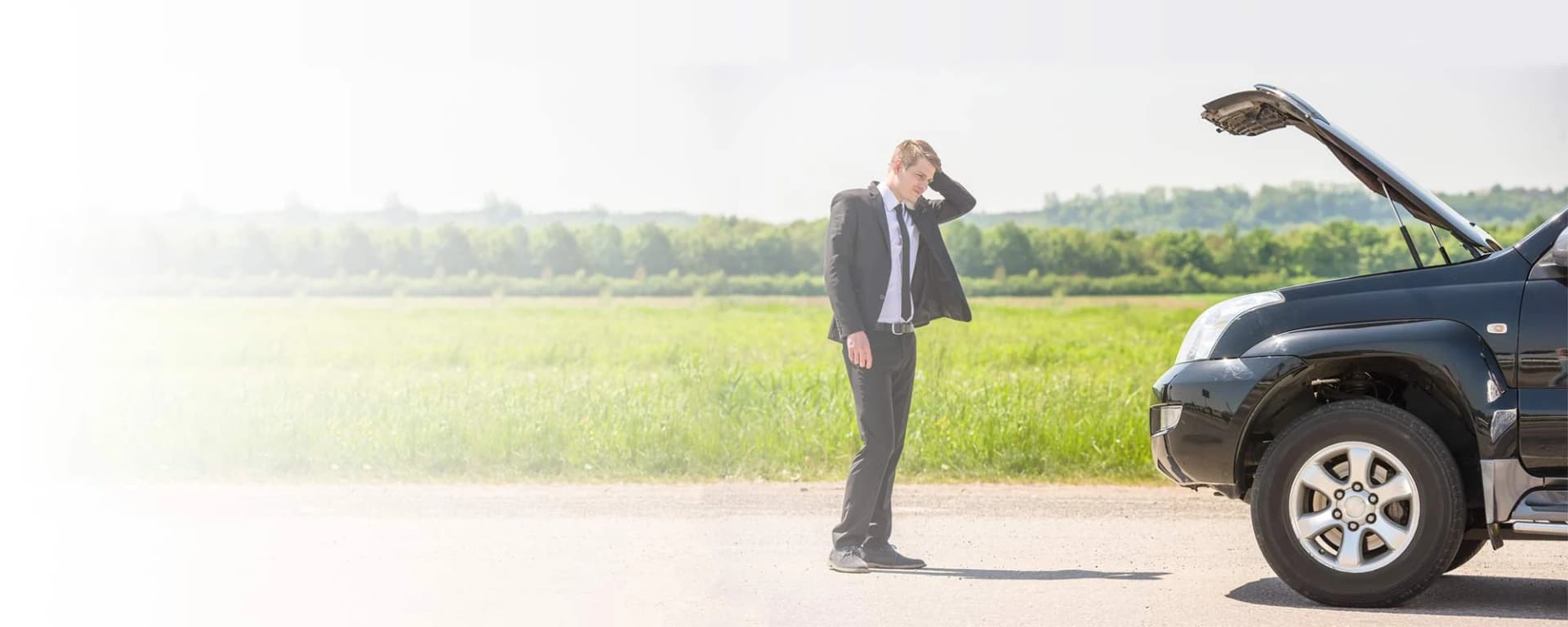
A breakdown never picks a good time. One minute you're driving home on Route 2; the next you're on the shoulder with your hazards on, wondering who to call and what happens next. If you've never had to arrange an emergency tow before, here's exactly how it works in Greater Moncton — start to finish — so the unknown part is one less thing to stress about.
First: get yourself safe
Before you think about the tow, think about traffic. On a highway like Route 2, Route 15, or Route 11, a stopped vehicle is the hazard.
- Pull as far onto the shoulder as you safely can and turn on your hazard lights.
- Stay in the vehicle and keep your seatbelt on. On a live highway you are safer belted inside than standing on the shoulder.
- If anyone is hurt, call 911 first. A tow can wait; an injury can't.
What to tell the dispatcher
When you call our 24/7 line, the faster we get a few key details, the faster the right truck rolls. Have these ready:
- Where you are — a highway and exit number, a civic address, or a dropped pin. "Route 2 westbound, just past the Salisbury exit at mile marker 428" is perfect.
- What you're driving — make, model, and roughly how heavy. A sedan and a loaded one-ton need different equipment.
- What's wrong — won't start, won't move, in the ditch, in a collision. This tells us whether you need a tow or quick roadside help.
- Whether it's safe — are you blocking a live lane? Is anyone still in the vehicle? Pets? Say so up front.
How long will the truck take?
The honest answer: it depends on where you are and what's already on the road. In the city core, it's usually quick. Out on the highways toward Shediac, Sackville, or Salisbury, give it a little longer. We dispatch the closest available truck, not the next one in a queue, and we'll give you a realistic ETA when you call — then a tighter one once a driver is rolling. Keep your phone close and the ringer up; we may call back to confirm your exact spot.
Flatbed or wheel-lift — what shows up
Most modern cars, anything with all-wheel drive, and any vehicle that can't roll get a flat deck: all four wheels come off the ground, which is the safest way to move them. Lighter, drivable-but-disabled vehicles may get a wheel-lift. You don't need to know which to ask for — describe the vehicle and we'll bring the right unit. Heavier trucks, equipment, and recoveries get the heavy-duty gear.
What it costs
Emergency towing is priced on the type of vehicle, the distance, and the conditions — a straightforward shoulder pickup is not the same as a winch-out from a ditch. Ask for the rate when you call; a good operator will explain it before the truck is loaded, not after.
If you have roadside coverage, call your roadside provider first and request Dynamic Towing — we can't open that claim for you, so you have to make the call. We're a tow partner for CAA, Canadian Tire Auto Club, Allstate, Assistenza, DAA, AAA, Urgently, and your vehicle manufacturer's roadside program if it applies. Whoever covers you, ask for Dynamic Towing, your trusted towing partner since 1990.
After the hook-up
Once your vehicle is secured, tell the driver where it's going — your repair shop, your home, or our yard if you haven't decided yet. You can usually ride along in the cab. The driver will confirm the drop-off and make sure your keys and belongings go with the vehicle.
Who you're calling
Dynamic Towing has run Moncton's roads since 1990 — 24 hours a day, every day, in English and French, backed by CAA, Canadian Tire, and a 4.5-star reputation across hundreds of reviews. If you're stranded right now, don't overthink it: get in touch and we'll take it from there.